Katherine Carter, Churchill’s Citadel: Chartwell and the Gatherings Before the Storm (London: Yale University Press, 2024) RRP: £20.00.
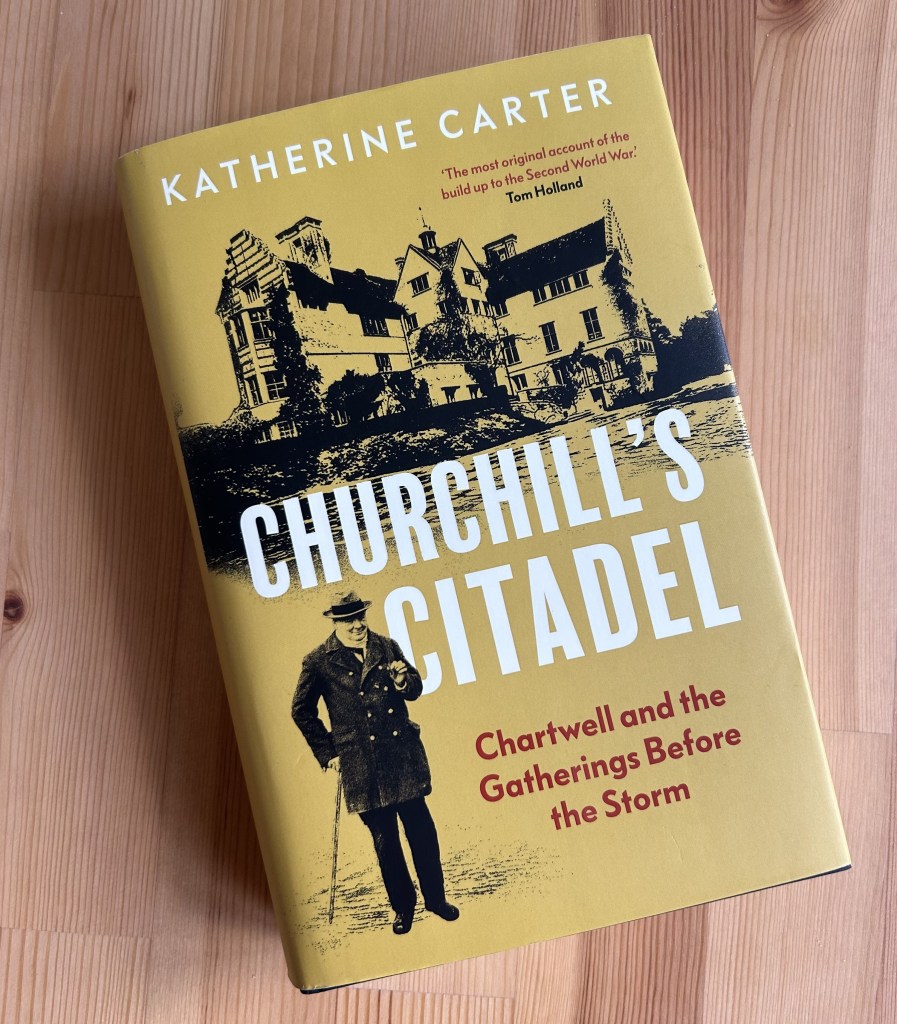
Despite the many studies on the life and times of Sir Winston Churchill, Katherine Carter demonstrates with this fascinating new book that there is still much to explore about the life of Britain’s greatest statesman. In this groundbreaking study, Carter explores Churchill’s life at Chartwell during the interwar period and how Chartwell operated not only as a family home but as a political headquarters from where Churchill would sound the alarm about the growing threat of Nazi Germany. No one is more expertly placed than Carter to discuss Chartwell’s role as the property’s custodian for the past decade.
With the turning of each page, a new door of this famous home is unlocked, revealing an intimate story of its inhabitants and those of the many guests it welcomed over the years. Functioning as Churchill’s command centre during the interwar period, Carter tells the story of the many famous guests whom the Churchills hosted, including the global elite, politicians, close acquaintances, and the informants for whom Churchill relied upon for information in his pursuit of demonstrating the threats posed to world peace. The most famous among them are Albert Einstein and T.E. Lawrence.
Despite Churchill being out of office during this period, in what some historians have referred to as his ‘wilderness years’, Carter provides a detailed analysis of how Churchill maintained his stature and remained updated on all political fronts with his network of informants. Due to the nature of Churchill’s earlier career and his stance as one of few politicians standing up against the government’s policy of appeasement, we also see many high-profile individuals turn to Churchill for information and advice. Through the many conversations and meetings at Chartwell, Churchill created a mental map of the movements of Hitler’s regime as he himself pursued his campaign for the need for rearmament and protecting European peace. Undeniably, the events and meetings that took place behind closed doors at Chartwell changed the course of history.
The tremendous task of Chartwell’s daily running and management fell upon Clementine and the plethora of staff who served the family over the years. From secretaries to chauffeurs, from butlers to gardeners, the operations of such a property took an extraordinary task force. Carter provides a fascinating insight into these individuals and their role in aiding Churchill. Due to their employers’ high demands and standards, with Churchill often dictating to secretaries until the early hours of the morning, there was a quick turnaround of staff. Responding to correspondence, typing speeches, articles, and book chapters, and accompanying Churchill to his meetings, the secretaries faced an almighty task of keeping up with Churchill’s ever-active mind and numerous activities. All, however, recall the fascinating role they played and the insights it offered them into Churchill’s reaction to global events. During these moments, they recalled how Chartwell became alive as an operations centre with phones ringing, letters arriving in abundance, and maps drawn out as Churchill interpreted the nation’s next move.
Expectedly, as Carter demonstrates, the operations and activities of Chartwell came at a significant financial cost. Despite Churchill’s love for the property, there was a stage when it was nearly sold. With rising costs and the Churchills spending more time in London, running the property seemed unfeasible. Churchill’s writing of books and articles kept the property afloat, but even then, the property always required extra work and maintenance. Alas, Churchill’s love for the property weighed out the financial burden, and it remained the family’s primary residence.
Through meticulous research, Carter provides not only an original account of the build-up to the Second World War, but also reveals personal insights into Churchill’s relationship with his family, staff, and friends behind closed doors. Shedding light on the importance of Chartwell as more than just a family home, Carter echoes Churchill’s ethos that ‘a day away from Chartwell is a day wasted.’
 Elliot Clark HISTORIAN
Leave a comment