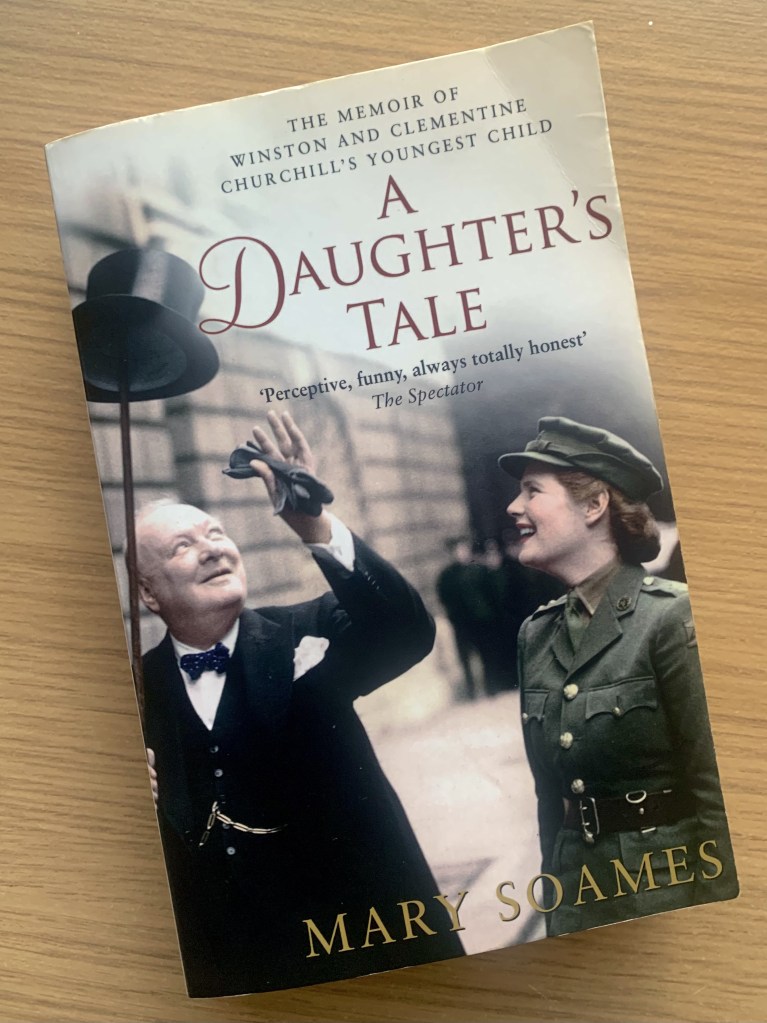
Former Prime Minister, David Cameron, remarked that Lady Mary Soames (née Churchill) was ‘an eyewitness to some of the most important moments in our recent history.’ This year marks the 100th anniversary of the birth of Mary Soames. Born on September 15th, 1922, Mary was the fifth and youngest daughter of Britain’s wartime Prime Minister Sir Winston Churchill and Lady Clementine Churchill. From her parents, she inherited her energy, passion, and determination to have an impact on the world, and shone in true Churchillian fashion.
At the time of her birth, Churchill also bought Chartwell, which would become the family home. Influenced by his nanny Elizabeth Everest’s love for Kent, Chartwell is in the heart of the Kent countryside with panoramic views across sweeping woodland and farmland. Churchill set out to create a haven and sanctuary for his children as he built a treehouse and the ‘Marycot’ within the Chartwell grounds. Reading the memoirs of the Churchill children, Chartwell certainly held a special place in all their hearts, especially for Mary who spent much of her early years there. Before Mary’s birth, in 1921, the Churchills suffered the devastating loss of their fourth child, Marigold. This created an even greater concern for the health of their other children. As a result, when Mary was born, she was largely raised by Clementine’s cousin, Maryott Whyte, rather than a governess brought in from outside of the family as the elder children had experienced. Whyte, known as ‘Nana’ to Mary, became an integral part of her life and stayed with her for nearly twenty years. Mary looked at her parents with great admiration. She acknowledged that for her mother, her father would come first, second, and third. Supporting Churchill’s career was a role the whole family took on. In her diaries, Mary wrote with great affection for her father as she monitored his role in the government, witnessing his rise to power.
Mary was more than just an eyewitness to history. During the Second World War, Mary played her role in supporting the nation in its hour of need. In her 1941 wartime diary, Mary writes of being caught in a dilemma. She felt it was her duty to stay home and support her mother Clementine, as her father became Prime Minister, while she also felt it was her national duty to join up and support the war effort with the Auxiliary Territorial Service (ATS). In doing so, Mary questioned what was right, not only for her but for her father. Churchill was very supportive of Mary’s decision to join the ATS, despite the fear of his daughter entering the danger, as he was supportive of all his daughters joining active service, with Diana joining the Women’s Royal Naval Service (WRENS), later becoming an Air-Raid Warden, and Sarah joining the Women’s Auxiliary Air Force (WAAF). On visiting Mary at her Hyde Park Battery, it was noted that it brought Churchill great pride to see his daughter give the order to ‘Fire!’ Mary, along with so many other women during the war, including the late Queen Elizabeth II, demonstrated the strength and resilience of their generation.
Throughout her life, Mary developed a crucial understanding of the political world. Accompanying her father on several major events, such as the Quebec Conference in 1943 and the Potsdam Conference in 1945, Mary was in the company of ‘The Big Three’ witnessing events which would change the modern world. Through both birth and marriage, Mary lived a life dedicated to public service demonstrating her skills as a public speaker, campaigner, and confidant. In February 1947, Mary married Christopher Soames with whom she had five children. By the time of her marriage, Mary was perfectly equipped with the skills to now support her husband’s political career as he served as MP for Bedford, and in later years as the UK’s Ambassador to France and as the Governor of Southern Rhodesia.
Mary also established her own identity away from the political world as an author. First writing a biography of her mother, in 1979, Mary demonstrated her art for writing and telling a story of a figure’s life despite admitting it was the first time she had written anything more than a pamphlet. It received spectacular reviews and was awarded the Wolfson Prize. Furthering the study of the Churchills, Mary later went on to publish Speaking for Themselves a collection of the letters sent between her parents. Other publications include studies on the Churchill family photographs and her father’s paintings, as well as writing her own memoirs, A Daughter’s Tale, published in 2011. As a collection, and independently, these publications provide the reader with a superb and personal insight into the lives of the Churchills over the years as they adapted to the turbulence of the twentieth century.
Through both birth and marriage, Mary Soames lived at the helm of British politics, witnessing major moments in history which would change the world as it was known. She was a dutiful daughter, wife, and mother, and was much loved by all of those around her. In 2021, Mary’s daughter, Emma Soames, published Mary Churchill’s War a collection of Mary’s diary entries from throughout the war years. It stands as a spectacular tribute to the duty and dedication Mary showed to both the nation and her father while also providing a fascinating insight into life as a young woman at war.
 Elliot Clark HISTORIAN
Leave a comment